Yu Shamo Noti
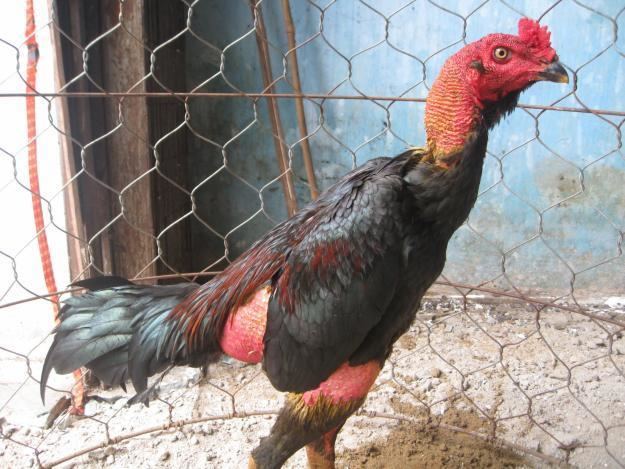
Domestic chickens ( Gallus gallus domesticus) fulfill various roles ranging from food and entertainment to religion and ornamentation. To survey its genetic diversity and trace the history of domestication, we investigated a total of 4938 mitochondrial DNA (mtDNA) fragments including 2843 previously published and 2095 de novo units from 2044 domestic chickens and 51 red junglefowl ( Gallus gallus). Visshaya matematika uchebnik dlya vuzov pdf download. To obtain the highest possible level of molecular resolution, 50 representative samples were further selected for total mtDNA genome sequencing. A fine-gained mtDNA phylogeny was investigated by defining haplogroups A–I and W–Z. Common haplogroups A–G were shared by domestic chickens and red junglefowl. Rare haplogroups H–I and W–Z were specific to domestic chickens and red junglefowl, respectively.
Yuu Shimaka (島香 裕, Shimaka Yū/Shimaka Yūtaka, born May 6, 1949) is a Japanese voice actor formerly affiliated with Production Baobab, and is now affiliated with Production Aigumi. He is the Japanese voice of the Disney character Goofy. Nogi Yu Kanji/Kana: 乃木優 Partner Digimon: Gekomon → Whamon (Perfect) → Marine Angemon Skull Satamon (Used K's Guise) Digimon Used: Gazimon → Garurumon (Black) → Pandamon, Wizarmon → Fantomon, Voice Actor: Sanpei Yuko (三瓶 由布子) Contents. 1 Profile; 2.
We re-evaluated the global mtDNA profiles of chickens. The geographic distribution for each of major haplogroups was examined. Our results revealed new complexities of history in chicken domestication because in the phylogeny lineages from the red junglefowl were mingled with those of the domestic chickens. Several local domestication events in South Asia, Southwest China and Southeast Asia were identified. The assessment of chicken mtDNA data also facilitated our understanding about the Austronesian settlement in the Pacific.
Introduction Being the most extensively distributed of the poultries, the domestic chicken ( Gallus gallus domesticus) provides humans with a stable sources of protein, including both meat and eggs (). The chicken has a long history of anthropomorphic usage in Southeast and East Asia, where it has been bred for entertainment (cockfight) and ornamentation (). The domestic chicken also serves as an important model animal in biomedical research (). Although humans derive much benefit from this poultry, its history of domestication remains open to debate. Since the times of Charles Darwin (), the origin and domestication of chickens has attracted wide interest from multiple disciplines (; ). A massive amount of research has focused on reconstructing the matrilineal history of domestic chickens using mitochondrial DNA (mtDNA) sequence data. These efforts document that the red junglefowl ( Gallus gallus) is the primary wild ancestor of the domestic chicken (, ).
The multiple, independent domestication events in southern China, South Asia and Southeast Asia involve several matrilines (; ). Kod aktivacii dlya autocad 2009 torrent. Most studies of chicken mtDNA rely on sequences of (partial) control region ( CR; D-loop: nucleotide position 1–1232; NC_007235). The relatively small size of CR limits the resolution of the mtDNA phylogeny. Because the mutation rate in this region is higher than that in coding regions, high levels of recurrent mutations can blur the structure of the matrilineal genealogy. Recent, fine-gained analyses have used the complete mtDNA genome to reconstruct the history of animal domestication, such as in cattle (,; ), dogs (), horses () and pigs (). These updated phylogenies provide new insights into the origins and history of domestication.
In the present study, we selected and sequenced 50 complete mitochondrial genomes from >2000 samples of domestic chickens and red junglefowl from China, India, Laos and Myanmar. Incorporating 11 published genomes, we reconstructed the matrilineal genealogy of the chicken to further refine the tree and better document the history of domestication. Samples We collected samples consisting of 2044 domestic chickens and 51 red junglefowl from China, India and Southeast Asia (see ). A total of 2874 published mtDNA sequences from domestic chickens ( n=2719) and red junglefowl ( n=155) were retrieved from either GenBank or published literature (see ). For the unpublished sequences, we confirmed the source and quality of sequencing.